



Are two-night bookings worth it?

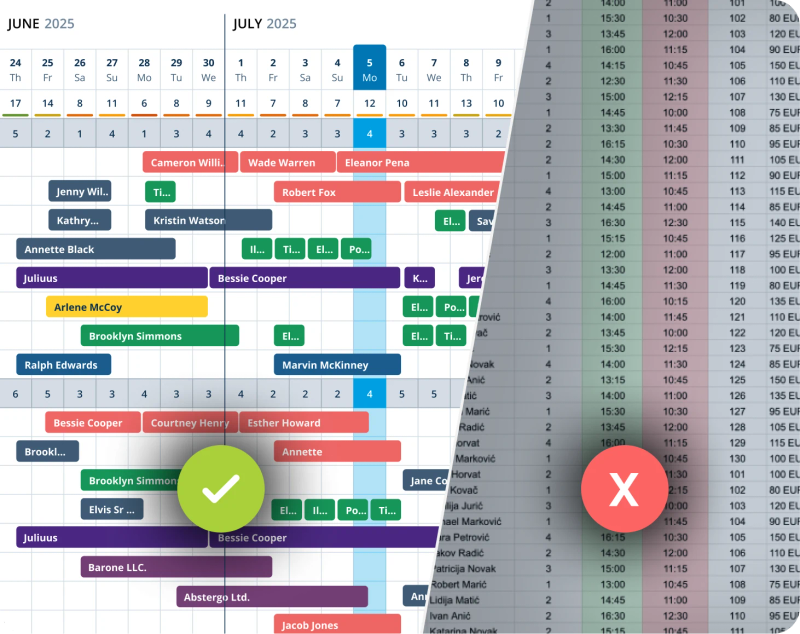
Gaps of one or two days usually appear between two longer bookings. One guest leaves on Tuesday and the next arrives on Friday, leaving two free nights in the calendar.
That raises the question of whether it is worth selling them, often at a lower price, or leaving them empty. A short booking brings income, but also a new guest changeover, cleaning, laundry, extra communication and the organisation of arrival and departure.
This year the change to the Airbnb fee enters the calculation as well. Airbnb is moving to a single fee of 15.5 % paid in full by the host, which means a short stay can leave you with less than before. How that change affects earnings we explain in more detail in the second section.
Even so, there is no answer that holds for every property. Profitability depends on the nightly rate, the cost of each guest changeover and the time the booking takes. That is why this text does not offer a general rule, but a calculation with which you can judge whether filling a short gap in the calendar is worth it.
All amounts in the examples serve purely as illustration. They are not market averages or guaranteed values. Commission rates and tax rates are stated with their sources, while your actual costs and prices may differ considerably.
1. Higher occupancy does not always mean higher earnings
Occupancy is the easiest thing to track, which is why it is often used as the main measure of success. The problem is that on its own it does not show how much money actually remained after costs.
That is why it is useful to distinguish four indicators:
- Total income is the amount the guest pays for the stay.
- Net income is the amount left after commission and the other variable costs connected to the booking.
- Occupancy shows what share of the available nights has been sold.
- Earnings per booking show how much net income each booking brings on average, meaning each new guest changeover.

Two properties can have the same occupancy and completely different earnings. A property with a larger number of short bookings has more cleaning, more laundry, more communication and more guest arrivals and departures for the same number of nights sold.
A calendar without gaps therefore does not necessarily mean a better business result. What matters is how much money remained after all costs, not only how many nights were sold.
Occupancy shows how many nights were sold. It does not show how much money from those nights remained.
2. Which costs should go into the calculation?
The calculation should include variable costs, meaning all the costs that arise because that booking was accepted.
Fixed costs, such as flat-rate tax, insurance or annual maintenance, arise regardless of whether the property is occupied. That is why we leave them out of this calculation.

Sales channel commission
Commission is not the same on every channel, so there is no point estimating it with one general percentage. It depends on the platform, the fee model and the programmes you take part in.
With Airbnb the change is particularly important this year. In a post dated 7 July 2026, Airbnb announced the move to a single fee of 15.5 % paid in full by the host, replacing the previous model in which the host and the guest shared the fee.
The deadline for adjusting prices in the European Economic Area and Switzerland is 13 October, while for other markets the deadline is 15 September. The source is Airbnb's post on simplifying service fees.
For some hosts this means an increase in the fee from roughly 3 % to 15.5 % per booking. We explained the change and its impact in more detail in the article "Airbnb raises its commission to 15.5 %".
VAT at the rate of 25 % is also charged on commission from foreign platforms. Hosts who are not in the VAT system have that obligation too.
Because of this, the real cost of the 15.5 % fee comes to roughly 19.4 % of the booking value. We use that figure in the examples below because it shows how much money actually goes on commission and the associated VAT.
For all other sales channels, check the rate stated in your own contract.
Cleaning the property
If cleaning is an external service for you, enter into the calculation the full amount you pay for one guest changeover.
If you clean yourself, the cost still exists. You do not pay it directly in money, but you invest your own time and work.
Decide what one hour of your work is worth and multiply it by the time needed for cleaning. If you leave that cost out, the calculation will show higher earnings than the real ones.
Laundering bedding and towels
The cost of bedding and towels is often underestimated because it consists of several smaller items:
- washing and drying
- ironing
- transport to the laundry and back
- the time needed for preparation and folding
- wear on the textiles and their replacement after a certain number of washes
If you use an external laundry, enter the amount on the invoice. If you do everything yourself, count on the water and electricity used, the detergents, the transport and your own time.
Consumables
With every guest changeover there are also smaller products that may seem unimportant individually, but add up over the season.
- toilet paper and soaps
- cleaning products
- bin bags
- coffee, tea and welcome products
- water and other products you leave for guests
The simplest approach is to estimate the average cost of consumables per booking and use it in every calculation.
Utilities
Water, electricity, air conditioning and heating are used during a short stay as well.
With a two-night booking that cost will be lower than with a week-long stay, but it is not zero. It can matter especially in summer and winter, when air conditioning or heating runs for a large part of the day.
For the calculation you can use an estimated average daily utilities cost and multiply it by the number of nights.
The host's time
Time is one of the items most often left out, even though it often makes up a large part of the total cost of a booking.
- answering enquiries before the booking
- sending instructions and arrival details
- guest check-in
- organising the arrival
- communication during the stay
- check-out and inspecting the property after departure
Add up the minutes spent, convert them into hours and multiply by the value of your hour. Include the resulting amount in the calculation like any other cost.
If you do not include your own time in the calculation, it will show earnings that do not exist in reality.
3. A simple formula for calculating profitability
The calculation has two steps. The first shows how much money is left after all costs.
Net income from a booking = income from nights + cleaning fee - commission with VAT - cleaning - laundry - utilities - consumables - other variable costs
The second step cannot be solved by a formula. You need to judge whether the amount left is sufficient in relation to the time and the work the booking demands.

That is why it is useful to set a minimum net amount per booking before the season. That is the line below which a short booking is not accepted. Once that line is set, the decision is no longer a matter of impression, but a comparison of two numbers.
The formula shows how much money is left after all costs. The line below which that amount is not enough has to be set in advance.
4. An example of a profitable two-night booking
The prices and costs in this example serve only as illustration. The commission rate and the VAT rate are based on real values.
- nightly rate: 140 EUR
- number of nights: 2
- income from nights: 280 EUR
- commission of 15.5 %: 43.40 EUR
- VAT on commission of 25 %: 10.85 EUR
- cleaning and bedding: 60 EUR
- utilities and consumables: 20 EUR
- other variable costs: 10 EUR
- the amount left: 135.75 EUR, before tax and fixed costs
In this example the booking makes sense because the nightly rate is high enough that the costs of an additional guest changeover do not eat up most of the income. After all variable costs, 135.75 EUR is left, which is almost half of the income from the nights.
The position of the booking in the calendar matters too. If it fills a two-night gap between longer stays, those nights would probably have stayed unsold without the short booking. Since the booking does not take up dates that could be sold as a longer stay, it earns additional income without blocking a more profitable booking.
With a higher nightly rate, the cost of a guest changeover makes up a smaller share of total income.
5. An example of an unprofitable two-night booking
The same property, the same two nights, but a lower price. The prices and costs in the example are again illustrative, while the commission and VAT rates are real.
- nightly rate: 65 EUR
- number of nights: 2
- income from nights: 130 EUR
- commission of 15.5 %: 20.15 EUR
- VAT on commission of 25 %: 5.04 EUR
- cleaning and bedding: 55 EUR
- utilities and consumables: 20 EUR
- other variable costs: 10 EUR
- the amount left: 19.81 EUR, before tax and fixed costs
In this example cleaning and bedding make up more than 40 % of the income from the nights, while commission and the associated VAT take a further 25.19 EUR. After all variable costs, 19.81 EUR is left.
For that amount you still have to answer enquiries, prepare the property, organise the guest's arrival and departure and inspect the property afterwards. The booking also carries the usual risks, such as damage, a late departure or a negative review.
That does not mean such a booking should always be turned down. It can make sense if it fills a gap that would very probably have stayed unsold and does not require much extra work. Still, if the minimum net amount you set in advance is higher than 19.81 EUR, the calculation clearly shows that the booking should not be accepted.
When the cost of a guest changeover takes up a large share of the income, the amount left often does not justify the work required.
6. When is a two-night booking most often worth it?
A short booking most often makes sense in the following situations:
- it fills a gap between two existing bookings
- it is unlikely that the gap will sell as a longer stay
- the property has a sufficiently high nightly rate
- the cleaning fee is charged separately
- cleaning is well organised and does not depend on your personal availability
- self check-in is used, so the arrival does not require you to be present
- no large discount is needed for the booking
- there is demand in the destination for short weekend stays
- short stays match the profile of the guests who already book that property

In all those situations a short booking fills a slot that might otherwise stay empty, without creating a mismatch between the income and the extra work.
A short booking pays off most when it fills a slot that would not sell any other way.
7. When is it better to leave two nights empty?
A short booking usually does not make sense when:
- it could block a longer stay for which there is still realistic demand
- demand is high and there is a good chance of selling a larger number of nights
- cleaning is expensive or hard to organise at short notice
- the property takes a lot of time to prepare
- the nightly rate is not enough to cover the cost of a guest changeover
- the booking can only be won with a large discount
- the arrival and departure require complicated logistics
- there is not enough time in the schedule for another guest changeover
An empty night brings no income, but it creates no additional variable costs either. A booking with net income that is too low brings income, but at the same time requires cleaning, communication, preparation and the organisation of arrival and departure.
So it is not enough to ask whether the slot can be sold. The more important question is how much will be left after all costs and whether that amount justifies the extra work.
An empty night brings nothing. A badly priced night can bring too little to justify the cost and the work.
8. How can you make short bookings more profitable?
Once the calculation is known, the next step is to improve the items that most affect the result. With short bookings those are the nightly rate, the cost of a guest changeover and the time needed for communication, preparation and the organisation of arrival and departure.
Set a minimum price for short stays
The nightly rate for a two-night stay does not have to be the same as the rate for a seven-night stay. A short booking creates almost the same cleaning and preparation cost as a longer one, but that cost is spread over fewer nights.
That is why a higher nightly rate for a short stay is not a penalty for the guest, but a way of covering the real cost of the booking.
Charge a cleaning fee
The cleaning fee covers part of the fixed cost of every guest changeover, which is why it affects the profitability of short stays the most.
Even so, a fee that is too high can raise the total price of the booking and make the offer less competitive, especially because the guest sees it as a separate item. The amount should therefore match the real cost and be in line with the total price of the stay.
Check your prices before 13 October
If the property is sold through Airbnb, the new single fee reduces the amount left from every booking. With short stays that effect is felt even more, because the total income per booking is smaller.
The deadline for adjusting prices within the European Economic Area is 13 October, so before then you need to check whether your current price leaves a sufficient net amount after commission and VAT.
Use rules for filling gaps
There is no need to drop the minimum stay to two nights for the whole period. You can allow short stays only when a gap of one or two days is left between two existing bookings.
That way slots that might otherwise stay empty get sold, without increasing the risk of a short booking blocking a longer and more profitable stay.
Do not lower the price automatically
A discount should be based on demand and on the calculation, not on the fear that a slot will stay unsold.
If the reduced price pushes net income below the line you set in advance, the discount has filled the calendar but has not improved earnings.
Automate communication and track earnings per booking
Automated messages before arrival, self check-in instructions and messages after departure reduce the time each booking takes. That matters especially with short stays, where the same tasks repeat more often.
Alongside automation it helps to keep simple records for every booking. Note the income, the commission with VAT, the cost of cleaning, laundry and consumables, the time invested and the amount left.
After one season, decisions will no longer depend on estimates but on your own data.
A short stay creates almost the same preparation cost as a longer one. The nightly rate should reflect that.
9. How do you set a minimum stay rule?
One rule for the whole year rarely matches actual demand. In July and August a different logic applies than in October, and the rules should also be adapted to the type of property, the location and how guests book it.
An example schedule, which should be adapted to your own property and destination:
- peak season: a minimum of 4 or 5 nights
- a gap between existing bookings: allow a stay of 2 nights
- shoulder season: a minimum of 2 nights
- dates with high demand: keep a longer minimum stay
- weekends and holidays: set a separate rule, depending on the demand for short stays in the destination
These are not universal rules, but a starting point. A city property with a high nightly rate and a holiday house on an island will not have the same schedule or the same demand.

A minimum stay is not one setting for the whole year, but a different rule for different periods.
Check this today
Before accepting a two-night booking it helps to answer five questions:
- How much is left after all variable costs, including commission and VAT on commission?
- How much time does a new guest changeover take?
- Is there a realistic chance of a longer booking on those dates?
- Does the booking require a significant price reduction?
- Is the amount left enough to justify the extra work and risk?
If the answer to the last question is no, an empty slot is the better option.
Conclusion
Short bookings are neither good nor bad in themselves. Their profitability depends on the nightly rate, the variable costs, the time invested, demand, the position of the gap in the calendar and the chance of selling a longer stay.
This year the change to the Airbnb fee enters the calculation as well, so before 13 October it is worth checking your prices and minimum stay rules.
The goal is not to fill every free night. The goal is to accept the bookings where the amount left after costs justifies the work a new guest changeover requires.
In Rentlio One, prices and minimum stay rules can be set for different periods, updated on all sales channels at once and connected to automated messages for guests. That way every additional booking requires less manual work.
Frequently asked questions (FAQ)
Is it worth cleaning an apartment for just two nights?
It depends on the relationship between the nightly rate and the cost of a guest changeover. If the price is high enough and cleaning is well organised and predictable, a two-night booking can leave a satisfactory net amount. If cleaning and bedding make up a large share of the income and preparing the property takes a lot of your own time, the amount left may not justify the work. That is why it is better to base the decision on the calculation than on how full the calendar looks.
Should you charge for cleaning on a two-night stay?
The cleaning fee covers part of the fixed cost of every guest changeover. With short stays it is especially important because that cost is spread over a small number of nights. Even so, a fee that is too high can considerably raise the total price of the booking. The amount should therefore match the real cost and be proportionate to the nightly rate.
How does the new Airbnb fee affect short bookings?
Airbnb is moving to a single fee of 15.5 % paid by the host, with a deadline of 13 October for adjusting prices within the European Economic Area. VAT of 25 % is also charged on the commission, so the real cost comes to roughly 19.4 % of the booking value. With short stays that cost is felt more, because the total income per booking is smaller, while the costs of cleaning, preparation and communication stay almost the same.
Should you raise the nightly rate for short bookings?
A higher nightly rate can be justified, because a two-night booking creates almost the same preparation cost as a considerably longer stay. Instead of applying the same price to every length of stay, you need to calculate which price leaves a sufficient amount after all variable costs.
Is it better to have empty nights or to accept a cheap booking?
An empty night brings no income, but it creates no cost of a new booking either. A cheap booking brings income, but it also brings commission, VAT on commission, cleaning, laundry, utilities, consumables and extra time. If too small an amount is left after all those costs, an accepted booking does not have to be the better decision than an empty slot. The decision should therefore be based on net income, not on how the calendar looks.


Daniel Herman is a growth marketing enthusiast with 10 years of marketing experience who enjoys thinking strategically and seeing the bigger picture. He writes about everything related to developing marketing activities and KPIs, branding, and taking a long-term approach to success, always with the goal of sharing useful ideas and inspiring action.