





Starting a Vacation Rental in Croatia? 7 Things to Get Right

You already have the property. Maybe you bought it, maybe you inherited it, maybe it was a family holiday home until now. The decision is made and your first guests arrive this summer. The question is no longer whether to start, but how to start so the second season is not harder than the first.

Croatian tourism hit a record in 2025 with 110.1 million overnight stays and 21.8 million tourists, according to Croatian National Tourist Board data from the eVisitor system. The market is growing, but so is the number of listings. Competition inside every town and county is tighter than ever, which means the first season is no longer just hand over the keys and pour a welcome drink.
Booking, Airbnb and other OTA channels treat a new listing like a candidate that has to prove its reliability over the first few months. Everything you set up in those months feeds the data that decides your next season. Experienced owners, the ones who have been through a few seasons, recognise the same mistakes. These are seven things that, with hindsight, are worth setting up differently from day zero. This guide is written for owners starting out in Croatia, whether you live here or run the property from abroad.

1. Sort the legal and tax framework before the first guest, not after
What do you need to set up legally before your first guest arrives?
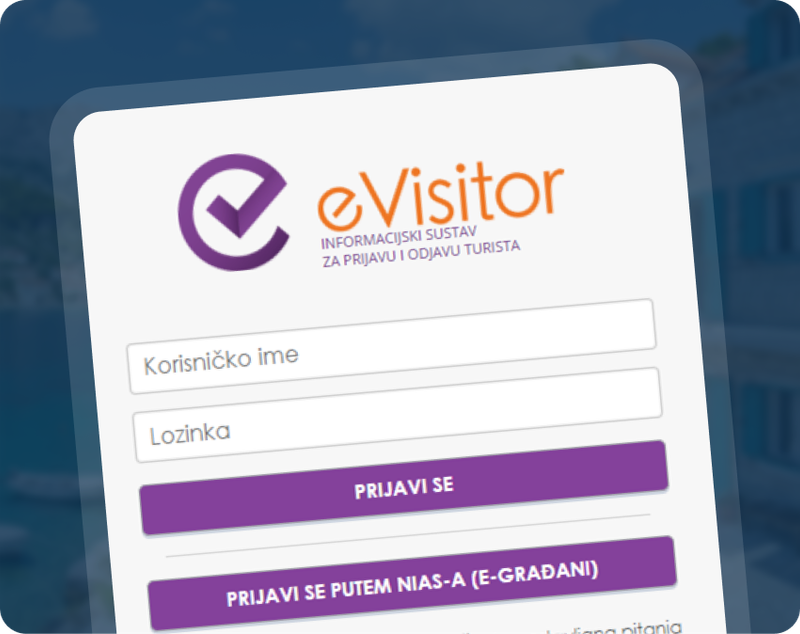
The legal framework for a vacation rental in Croatia includes a categorisation decision (rješenje o kategorizaciji) issued by the competent county or city office, registration of the property in the eVisitor system, and choosing your tax status. Private owners (iznajmljivači građani) pay a flat tax per bed set by the local town or municipality, while VAT registration becomes mandatory above 60,000 euros of annual turnover.
Mistake No. 1
Starting to host before the categorisation decision is issued or before registering in eVisitor. An inspection arrives during summer, writes a fine, and your season can stop halfway, taking everything you invested with it.

The better approach
Have all the paperwork done by February, not May. The categorisation decision is issued by the competent county or city administrative body. The administrative fee itself is around 9.29 euros, but the full cost also includes mandatory inspections of installations and a standardised categorisation plaque. Registration in eVisitor is mandatory before the first guest arrives, and your tax setup follows your expected turnover.
The cost of the mistake
Fines for an unregistered guest in eVisitor range from 500 to 5,000 euros, under the tourist tax law in force. A single fine can eat the income from the first half of your season. Also read what a vacation rental invoice must include.
The legal framework is not paperwork, it is the precondition for visibility on the channels. Without a categorisation decision there is no legal listing on Booking or Airbnb.
All the paperwork is done by February, not the week before the first guest. That is the difference between a calm season and a season with an inspector.
2. The price of the first booking sets the direction for the whole season
How should you price your apartment for the first season?
The price for the first season is set by comparing five to ten similar properties within a three kilometre radius, not by a neighbour's advice or a gut feeling. Your ADR, the average daily rate of the first season, becomes the benchmark that Booking and Airbnb algorithms use to segment your listing the following year.
Mistake No. 2
Dropping the price out of fear that nobody will come. The first guests book cheaply, leave reviews, the channels remember the listing as low priced and keep it there. In the second season you try to raise the price, but conversion drops because the algorithm already knows where the listing belongs.

The better approach
Set a target ADR for the first season, not a nominal nightly price. Check five to ten similar listings within a three kilometre radius on the same dates you plan to advertise. Aim to land within 10 to 15 percent of the median of similar properties, not below it. Do not switch on Mobile Rate, Last Minute and Genius Level 1 all at once, because discounts stack, they do not combine. More on how to set vacation rental prices.
The cost of the mistake
A 30 euro lower ADR times 100 nights is 3,000 euros of lost income in the first season. Plus the negative effect on ranking for the second season, which compounds over years.
The first season is not run for income, it is run for the data that feeds the algorithm. A price set just to get bookings stays with you for years.
The first season ADR is worth more than one off income. It sets the direction of the whole algorithmic path of the listing.
3. A Channel Manager from day one, not after the first double booking
What is a Channel Manager and why set it up immediately?
Channel Manager is a system that synchronises prices, availability and bookings between all your sales channels in real time. When a guest books on Booking, the same dates close instantly on Airbnb, Expedia and other channels. Without it, every channel runs its own calendar, which leads to double bookings.
Mistake No. 3
Starting with a single channel (usually Airbnb because it is easier to set up) and maintaining the calendar manually once you add a second. The first double booking is only a matter of time, and it usually happens at the peak of the season.

The better approach
Booking and Airbnb connected from day zero, with a Channel Manager active before the first listing goes live. No manual calendar management, ever.
The cost of the mistake
Booking treats an owner triggered cancellation as a negative ranking signal. One double booking in the first 30 days means months of slower visibility, plus a negative review from the cancelled guest that stays visible for a year.
Villa Nepos in Split has recorded zero double bookings since it started using Rentlio. The Channel Manager was not set up after the first incident, it was set up before an incident was possible.
A Channel Manager is not a scaling tool, it is insurance. You set it up before you need it, not after.
Use a Channel Manager from the first channel. The cost of the tool is lower than the cost of a single double booking with a cancellation.
4. eVisitor automation saves hours and prevents fines
How do you register a guest in the eVisitor system?
eVisitor is the national guest registration system through which the Croatian National Tourist Board keeps records of overnight stays and calculates the tourist tax. Registration is mandatory within 24 hours of a guest's arrival. It can be done manually through the web interface or automatically through an integrated PMS that pulls the data from the booking. See the complete guide on how to register guests in eVisitor.
Mistake No. 4
Registering every arrival manually through the web interface. With 30 guests in summer that is an hour a day of routine data entry, plus the risk of slipping when a guest arrives at 10 pm and registration gets pushed to the next morning.
The better approach
Activate the eVisitor integration before your first guest. Every booking then means an automatic transfer of data from the booking system into eVisitor, with no manual retyping. The hour a day otherwise spent on records stays free for more important things.
The cost of the mistake
Time compounds: an hour a day times 90 summer days is 90 hours a year on manual records alone. Fines for an unregistered guest run from 500 to 5,000 euros for owners.
Sukha Vacation House in Međimurje cut its eVisitor record keeping to one hour a week after integrating with Rentlio, with zero errors in registrations across the whole season.
eVisitor is not bureaucracy, it is an operational process that either eats your season or runs itself.
Activate eVisitor automation before the first guest, not after the first panic in July. 90 hours a year plus the risk of a fine is too much for manual handling.
5. Pre-arrival communication shapes the first review
What should you communicate to a guest before arrival?
There are three key moments in pre-arrival communication: the booking confirmation (basic accommodation information, host contact), a message 48 hours before arrival (exact address, parking, WiFi, check-in instructions), and a message one hour before arrival (arrival check, status of the apartment, mobile contact). Without an automated sequence all of this happens ad hoc.
Mistake No. 5
Writing to every guest individually from memory, missing pre-arrival information, a guest arriving at a locked door looking for a phone number. The first review hurts before it is even published. A guest arriving at 10 pm with no confirmation that the space is ready adds stress that carries into the experience of the whole stay.

The better approach
Three message templates, an automated sequence, the same order for every guest. Centralised sending from one interface, not from WhatsApp by memory. The whole guest handling from confirmation to check-in drops by tens of minutes per booking, and the quality of communication becomes consistent. Also read tips on using AI for guest communication.
The cost of the mistake
Four stars instead of five on the first review means months of compensating with later positive reviews. Booking and Airbnb algorithms weight early reviews disproportionately when ranking a new listing.
Apartmani Lavandula in Zadar cut guest handling by 10 minutes per booking after moving to a centralised communication system. At 200 bookings a season that is more than 30 hours a year on arrival preparation alone.
The first review is not luck, it is the product of communication that happened before arrival.
Three templates, an automated sequence, the same standard for every guest. That is the difference between a 9.2 and a 9.8 review average.
6. The first five reviews decide visibility for the next fifty
How important are the first reviews for a new apartment?
Booking and Airbnb algorithms weight early reviews disproportionately compared to later ones. The first five reviews have more impact on a new listing's ranking than the next fifty. A listing with a 9.5 average after the first five stays visible in the top half of results. A listing with an 8.5 average drops to the bottom half and stays there for months.
Mistake No. 6
Passively waiting for a guest to leave a review on their own. Most guests do not leave a review unless you ask actively. The whole first season passes with two or three reviews, which is not enough for the algorithm to promote you in a saturated market.
The better approach
An automated post-stay message sequence with an active review request, 48 hours after departure. Respond to every review, positive and negative. Reviews below 8 get a serious follow-up with concrete steps on what was changed, not a defensive reply with excuses.
The cost of the mistake
A small number of reviews means low visibility. Low visibility means few bookings in the second season. You then try to make up the second season by lowering the price, which pushes the listing back into the low-review cycle. A loss that compounds from season to season. Here are tips on how to respond to guest reviews.
Asking for a review is not an awkward moment, it is part of the operational process. Guests who had a good stay are happy to leave one, you just have to ask.
Ask for a review actively 48 hours after departure. Five reviews with a 9.5+ average are the runway for the second season.
7. Direct bookings are built with the first guest, not the thirtieth
What is a Booking Engine and when do you activate it?
Booking Engine is a reservation module on your own website that lets a guest book directly, without OTA commission. Activating it in the first season costs the same as later, but it opens up years of collecting direct contacts and repeat bookings without paying commission.
Mistake No. 7
All bookings go exclusively through Booking and Airbnb. A commission of 15 to 20 percent goes to the platform. The guest stays a Booking guest forever, the contact is never recorded, and next year's repeat booking again goes through the platform with the same commission.

The better approach
Your own website with an integrated Booking Engine before the first guest. Record the guest's contact details with their consent, and after the stay send a message sequence inviting a direct repeat booking for next season, with a 5 to 10 percent discount for direct guests. The contacts collected during the first season turn into a mailing list that carries income for years without commission.
The cost of the mistake
A repeat guest who books through Booking instead of directly carries 100 to 200 euros of commission per booking, depending on the stay value. Five repeat guests a year over five years is 2,500 to 5,000 euros of lost income on commission alone.
Balatura Luxury Rooms in Split records more than 15 guests who return every season through direct bookings, without going through an OTA.
The first guest does not belong to Booking, it belongs to the property. The only question is whether you will keep them.
A Booking Engine and your own website exist from the first guest. Commission for the first season is an investment, commission for the fifth is not.
Conclusion
All seven things share one thing. The cost of the mistake is not felt in the first 30 days, it is felt in the second season and the years that follow. The real price of a late Channel Manager, a low ADR or passive communication shows up only when the second season does not grow as expected. By then it is too late for a cheap fix.

More than 1,700 properties in the region already use the Rentlio app for vacation rentals. The difference between their first and second season was not built on luck, it grew on a system set up before the first guest. Book a free consultation and lay the foundations of your first season in time.
Frequently asked questions
Do I need a Channel Manager from day one or only after a few bookings?
You need one from day one if the property is listed on more than one platform. Maintaining the calendar manually between Booking and Airbnb always ends in a double booking, it is only a matter of time. A Channel Manager is set up before the first guest arrives, not after the first problem.
Flat tax, craft or company for the first season of renting in Croatia?
Most private owners operate on the flat tax regime, where tax is paid per bed and the amount is set by the town or municipality according to the tourism development index, regardless of turnover. The 60,000 euro annual turnover threshold is the line for entering the VAT system and the obligation to keep business books, not an automatic switch to a craft or company. For the specific choice, consult an accountant based on your expected turnover and cost structure.
How much time is lost on manual eVisitor registration per guest?
Manual registration of one guest takes between 5 and 10 minutes including retyping data from the ID document. With 30 guests in summer that is an hour a day on records alone. Integration with a booking system shortens the process to a few seconds per booking.
How do you ask for a review without the guest feeling pressured?
The best moment is 48 hours after departure, when the impression of the stay is still fresh but the stress of travel has passed. The message should be short and concrete, with a link to the review on the platform where the booking was made. Without offering a discount or gift in exchange for a review, because that breaks Booking and Airbnb terms.
When should I activate a Booking Engine and my own website, before or after the first season?
Before the first season, ideally in the same period when you obtain the categorisation decision and set up the channels. The activation cost is the same in the first season as in the fifth, but every guest who goes through an OTA in the first season is a missed chance for direct contact with repeat guests.
What ADR should I aim for on the Adriatic in the first season?
It depends on location, category and the quality of the equipment. The rule is not a fixed amount but a comparison: five to ten similar properties within a three kilometre radius, on the same dates you plan to advertise. Aim to be within 10 to 15 percent of the median of similar properties, not below it. A lower ADR in the first season becomes the benchmark the algorithm uses the next year.
What if the Booking and Airbnb calendars do not sync properly?
Manual iCal synchronisation has a lag of 2 to 24 hours, which is enough for a double booking at the peak of the season. A real Channel Manager syncs in real time, which means the dates close on all channels within seconds of the first booking. If the property is listed on more than one platform, iCal is not a reliable enough solution.


Daniel Herman is a growth marketing enthusiast with 10 years of marketing experience who enjoys thinking strategically and seeing the bigger picture. He writes about everything related to developing marketing activities and KPIs, branding, and taking a long-term approach to success, always with the goal of sharing useful ideas and inspiring action.